
Managing Peak-Hour Traffic in Food Court POS: Tools That Help You Scale
Ever watched a food court turn into a buzzing hive during lunch hour, orders flying in, queues piling up, and staff racing to keep up? What if there was a smarter way to tame that chaos without slowing down the service?
Managing those high-pressure rush hours isn’t just about speed: it’s about precision, coordination, and the right technology. That’s where a food court POS steps in, transforming peak-hour madness into smooth, scalable operations.
In this blog, we’ll uncover the major challenges of managing peak-hour traffic in food courts, understand why traditional billing systems fall short, explore how a food court POS can transform operations, see real success stories, and discover the key benefits of using POS tools to scale effortlessly.
Let’s start with this guide!
The Challenges of Managing Peak-Hour Traffic in Food Courts
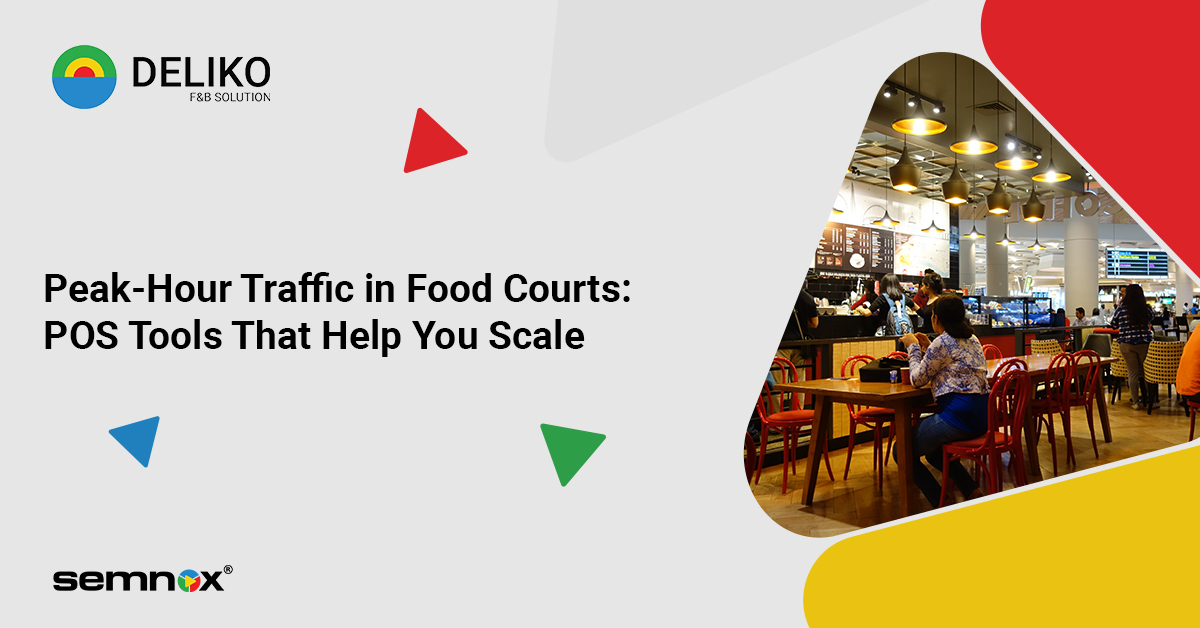
Peak hours in food courts can feel like organized chaos: if things are managed well. But without the right tools, it quickly becomes just chaos. Long queues frustrate customers, delayed orders confuse staff, and the pressure to maintain speed often leads to billing errors. As footfall surges, many operators struggle to manage food court traffic effectively while still delivering quick, consistent service.
This is where traditional systems often fail to keep up with the pace and complexity of multi-counter environments.
Why Billing Software Alone Falls Short in Food Courts?
A simple food court billing system can handle transactions, but it stops there. It doesn’t track live orders across multiple counters, manage stock depletion, or coordinate between different vendors under one roof.
So while billing software can print receipts quickly, it doesn’t offer the operational visibility needed during high-traffic hours. That’s why relying solely on billing software becomes a bottleneck instead of a solution.
Related blog: Revolutionizing Food Courts: The Role of Food Court Software in Enhancing Dining Experiences.
How POS Tools Help Food Courts Scale During Peak Hours?
A powerful food court POS works like a command center. It centralizes orders from different counters, syncs payments from multiple sources (cash, cards, wallets), and updates inventory in real time.
More importantly, it routes orders instantly to respective counters, helping kitchen staff prepare faster while reducing errors. This makes handling large crowds much more seamless. The automation reduces manual load on staff, allowing them to serve more customers without feeling overwhelmed.
Such POS solutions for food courts don’t just speed up service: they streamline the entire operational flow during rush hours.
Case Example: A Food Court Scaling with POS Tools
Imagine a busy metropolitan food court with 12 different stalls. Earlier, they relied on standalone billing software at each counter, which led to slow-moving queues and frequent order mix-ups.
After switching to a unified food court POS, they could monitor all counters from a single dashboard, analyze peak-time sales, and manage digital tokens for faster service. Within weeks, their average service time per order dropped by 40%, and customer satisfaction scores surged.
This real-world transformation shows how the right POS system can directly impact both operational efficiency and customer experience.
Key Benefits of Using POS in Peak-Hour Management
- Centralized Order Handling: Manage all orders across multiple stalls in one system
- Real-Time Inventory Updates: Prevent stock-outs during busy hours
- Faster Billing & Checkout: Reduce waiting time and long queues
- Integrated Payment Options: Support multiple payment methods without confusion
- Data-Driven Insights: Understand peak-hour trends to plan better staffing and stock
Also, read: Customer-Centric Food Court Management: FAQs Resolved.
Conclusion: Scale Your Food Court with Deliko
When it comes to billing software vs POS system, food courts need more than just basic billing: they need a complete food court POS to handle complexity at scale. Deliko offers a robust and intuitive solution that combines the speed of a food court billing system with the power of advanced POS technology.
It helps you manage food court traffic seamlessly, cut down service time, and deliver a smooth experience even during peak rush.
If you want to turn chaotic peak hours into well-orchestrated growth opportunities, Deliko is the partner your food court needs.
Scale faster. Serve smarter. Choose Deliko today!
Frequently Asked Questions (FAQs)
1. Is a food court POS system scalable for growing chains?
Yes, a food court POS is highly scalable, allowing you to easily add new outlets, menus, and staff profiles as your chain expands, without disrupting existing operations.
2. Do POS systems improve customer experience in food courts?
Absolutely! A food court POS streamlines ordering, speeds up billing, and integrates loyalty programs—offering a faster, smoother, and more personalized customer experience
3. How can a POS system help reduce long queues in food courts?
A food court POS enables quick order taking, digital payments, and self-service kiosks, significantly cutting down wait times and reducing crowd build-up during peak hours.
4. Why is billing software not enough for food courts?
Basic billing software only handles payments, while a food court POS offers inventory tracking, sales analytics, multi-counter management, and real-time order updates for complete control.
5. Can POS systems handle multiple outlets in a food court?
Yes, a food court POS is designed to centrally manage multiple outlets, giving real-time insights into each counter’s sales, stock, and performance from a single dashboard.

As a highly experienced thought leader in the hospitality industry, Suresh Kumar carries a unique combination of global experience and multi-industry specialty. With 15 years of experience as the marketing head and director of Lucid IT Solutions and seven years of directing sales at Pazo, Suresh has especially honed skills with F&B and restaurant POS — skills that make him an irreplaceable asset at Semnox. Now, he spearheads the realm of cafeteria management solutions through seamless business operations and collaborative development.