
POS System for Corporate Cafeteria: Everything You Need to Know
Introduction
Imagine this. It’s 1 PM, and hundreds of employees rush into the corporate cafeteria with just 30 minutes for lunch. Lines grow longer, orders get mixed up, and by the time they reach the counter, half their break is already gone.
In a fast-paced corporate environment, an inefficient POS system for corporate cafeteria operations quickly becomes a bottleneck. With limited lunch hours and high footfall, employees expect quick service, accurate orders, and seamless payments. Even minor delays can impact productivity and morale.
A specialised POS system for corporate cafeteria use is essential to keep things running smoothly. It reduces queues, streamlines transactions, and improves the overall dining experience, transforming the cafeteria from a daily frustration into a valued workplace amenity.
What Is a POS System for Corporate Cafeterias?
Alt text: POS System for Corporate Cafeteria
A POS system for corporate cafeteria operations is like the brain behind the lunch rush. Just as traffic signals keep vehicles moving smoothly during peak hours, this system manages orders, payments, and operations so everything flows without chaos.
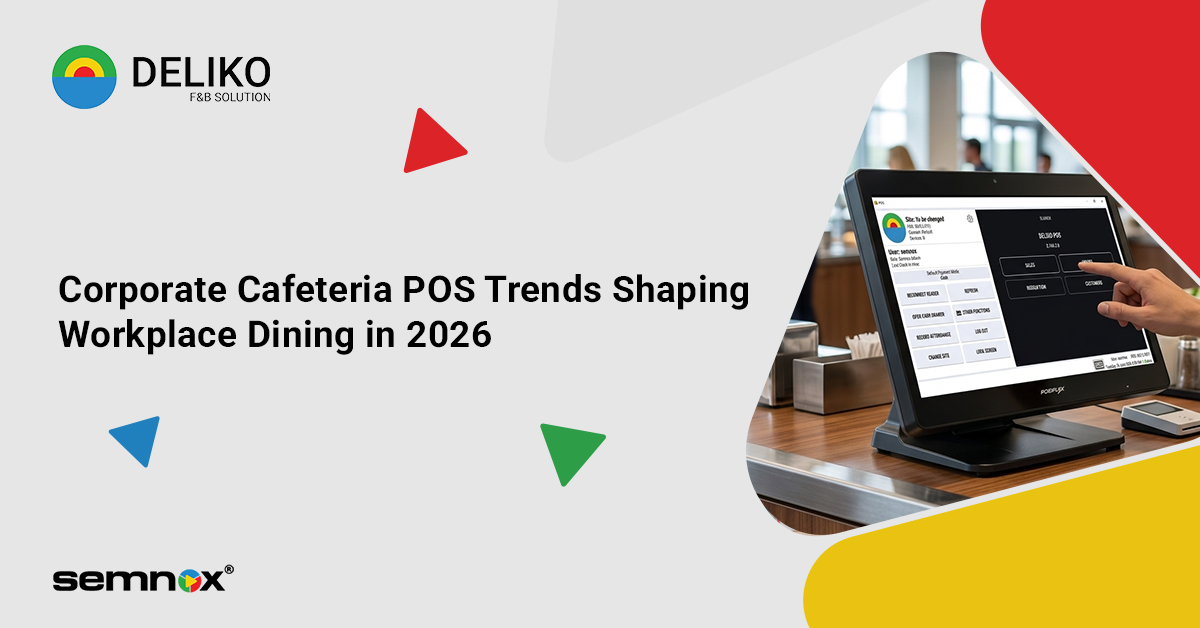
In simple terms, a POS system for corporate cafeteria use is a specialized mix of hardware and software that handles sales, tracks inventory, and manages payments. Unlike a basic cash register, it supports workplace-friendly options such as ID badge payments, payroll deductions, and fully cashless transactions through self-service kiosks or mobile apps.
By automating ordering and billing, it reduces waiting times, minimizes errors, and ensures faster service during short lunch breaks. The result is a seamless dining experience for employees and lower operational costs for cafeteria management.
Why Corporate Cafeterias Need a Dedicated POS System
Corporate cafeterias operate very differently from regular restaurants. They deal with high footfall in short time windows, employee meal subsidies, cashless payments, and multiple vendors or counters—all at once. A dedicated POS system is built specifically to handle these needs efficiently.
It helps speed up service, reduce queues, automate meal allowances, manage vendors, and provide real-time visibility into operations. Without a dedicated POS system, cafeterias face delays, errors, and poor employee experience. With one, they become faster, more organized, and easier to manage.
Key Features of a Corporate Cafeteria POS System
A modern POS system for corporate cafeteria settings needs more than basic billing — it has to handle high-volume, time-sensitive operations with precision. Here are the core features that make one effective:
- Fast and Accurate Order Management
A good cafeteria POS captures orders quickly and directly transmits them to the kitchen or service counters, eliminating manual errors and speeding up service during peak lunch hours. Advanced systems let staff pre-order meals or use mobile self-service options. - Cashless and Contactless Payment Options
Support for multiple payment types — including payroll badge deduction, mobile wallets, RFID cards or contactless payments — reduces transaction time and long queues. Deliko’s system lets employees skip cash entirely and pay through secure wallet-linked accounts. - Intelligent Reporting and Analytics
Live sales reports, expense summaries, and trend analytics help cafeteria managers understand peak hours, best-selling items, and cost centers. Deliko’s solution includes intelligent reports that reveal hidden trends and support better food and supply planning. - Inventory and Stock Tracking
Real-time inventory monitoring prevents stockouts and waste — critical when demand spikes at lunch. Many modern POS systems combine inventory data with sales to automatically update stock levels. - Pre-Ordering and Queue Reduction Tools
Features like online pre-order, mobile apps, or self-service kiosks allow employees to order before they arrive in the queue. Deliko enables pre-ordered meals to be served quickly, cutting wait times and letting staff enjoy their break.
How POS Handles Corporate Meal Subsidies & Allowances
Managing corporate meal subsidies and employee allowances manually can be messy and error-prone. A cafeteria POS system simplifies it:
- Integrated Subsidy Logic
A POS system for corporate cafeteria use can automatically apply meal allowances based on employee profiles without manual adjustment. When an employee swipes their ID badge or logs in, the system applies the correct subsidy or allowance, reducing mistakes and delay at billing. - Payroll / Badge Deductions
Instead of paying at the counter, many corporate cafeterias link meal charges to employee accounts or payroll. Deliko’s system supports cashless badge transactions, letting meal costs be automatically deducted based on predefined allowances or company policy. - Spend Limits and Rules Enforcement
POS software can enforce daily, weekly, or monthly meal budgets per employee, ensuring compliance with corporate guidelines while preventing overspending. This automated control removes a layer of accounting work and minimizes disputes. - Transparent Employee Statements
Employees can see what they’ve spent and how allowances were applied through receipts, dashboards, or linked mobile apps — boosting transparency and reducing queries to cafeteria staff.
POS System for Multi-Vendor & Multi-Counter Cafeterias
Large corporate cafeterias often run multiple vendors (e.g., snacks, hot meals, beverages) and counters. A robust POS system makes all of this seamless:
- Centralized Order Routing
Each vendor or counter can receive orders directly from a unified POS interface, reducing confusion and improving coordination. Orders from kiosks, apps, and counters are all consolidated into one dashboard. - Multi-Counter Billing
A POS system for corporate cafeteria use supports separate billing streams per counter while still aggregating data for overall reporting. This makes settlement with individual vendors easier and provides a clear financial picture to cafeteria operators. - Vendor Performance Metrics
POS analytics can break down sales and trends per vendor, helping corporate managers negotiate better contracts or rotate offerings based on popularity and performance. - Scalability Across Spaces
Whether you have one dining hall or multiple cafeterias across a campus, modern POS platforms — like Deliko — can scale up, integrate counters, and sync data across locations to ensure consistency. - Unified Inventory for Multiple Counters
With multiple service points, inventory management becomes even more critical. A POS system maintains stock levels across counters and notifies managers when supplies run low, preventing downtime or unhappy employees.
Cloud-Based POS vs Traditional POS for Corporate Cafeterias
Key Differences: Traditional POS vs Cloud POS
|
Parameter |
Traditional POS System |
Cloud POS System |
|
Cost Structure |
High upfront cost plus ongoing maintenance fees |
Affordable monthly subscription with minimal maintenance |
|
Software Setup |
Installed on-site and updated manually |
Cloud-based with automatic real-time updates |
|
Hardware Dependency |
Fixed, stationary terminals |
Works on mobiles, tablets, laptops |
|
Data Storage |
Stored on local/on-premise servers |
Securely stored on cloud servers |
|
Data Security |
Higher risk due to local storage |
Enhanced security with cloud encryption |
|
Remote Access |
Data accessible only on-site |
Access data anytime, from anywhere |
|
System Updates |
Manual updates and staff retraining required |
Updates happen automatically in real time |
|
Offline Functionality |
Limited or unavailable |
Continues working offline and syncs when online |
|
System Integration |
Multiple tools required for payments, loyalty, ordering |
Fully integrated platform for payments, loyalty, and ordering |
|
Scalability |
Difficult and costly to scale |
Easily scalable across locations and counters |
Read our detailed comparison: Cloud-Based POS vs Traditional POS
Benefits of Using POS in Corporate Cafeterias
A modern POS system delivers value across every stakeholder in a corporate cafeteria ecosystem:
- For Employees
Faster service, shorter queues, and cashless payment options make lunch breaks stress-free. Features like ID-based payments, pre-ordering, and clear spend tracking improve convenience and transparency. - For Organizations
A POS system streamlines cafeteria operations, enforces meal subsidies and allowances automatically, and provides real-time data for better cost control. It improves employee satisfaction while reducing administrative effort and wastage. - For Cafeteria Operators & Vendors
Vendors benefit from accurate order management, quicker settlements, and performance insights across counters. Inventory tracking and demand forecasting help reduce food waste and improve profitability. - Overall Impact
The right POS system transforms the cafeteria into a well-managed, efficient workplace amenity that saves time, lowers costs, and enhances the everyday employee experience.
Who Should Use a Corporate Cafeteria POS System?
A POS system for corporate cafeteria operations is ideal for any organisation that serves large groups within limited time windows and needs efficient, controlled food service.
- Corporate Offices & Business Parks
Mid-to-large enterprises with in-house cafeterias can use a POS system to manage high footfall, meal subsidies, and cashless employee payments seamlessly. - IT Parks & Tech Campuses
With multiple teams, shifts, and vendors operating simultaneously, a POS system for corporate cafeteria environments helps streamline multi-counter operations and reduce lunchtime congestion. - Manufacturing Units & Industrial Campuses
Facilities running canteens across shifts benefit from automated meal allowances, faster billing, and centralized reporting across locations. - Educational Institutions & Training Centers
Universities, corporate training hubs, and residential campuses can manage student or employee meals, prepaid plans, and vendor performance more efficiently. - Hospitals & Large Healthcare Facilities
Hospitals serving staff, doctors, and visitors can rely on a POS system to ensure fast service, controlled spending, and round-the-clock operations.
How to Choose the Right POS System for a Corporate Cafeteria
When evaluating a POS system for corporate cafeteria use, make sure it checks the following boxes:
- Cashless & ID-Based Payments
Supports RFID cards, employee ID badges, mobile wallets, and payroll deductions (like Deliko POS). - Meal Subsidy & Allowance Management
Automatically applies company-defined meal limits and subsidies without manual billing. - Fast Order Processing
Handles high-volume lunch rushes with quick billing and minimal errors. - Multi-Vendor & Multi-Counter Support
Manages multiple food counters and vendors from a single, centralized system. - Real-Time Inventory Tracking
Updates stock levels instantly to avoid shortages and food wastage. - Cloud-Based & Remote Access
Lets managers monitor sales, reports, and operations from anywhere. - Pre-Ordering & Self-Service Options
Enables kiosks or mobile ordering to reduce queues and waiting time. - Reports & Analytics
Provides clear insights into sales, consumption trends, and vendor performance. - Scalable & Easy to Maintain
Grows with your organization and requires minimal manual updates.
Conclusion
The right corporate cafeteria management software can completely transform how your cafeteria operates. A modern cafeteria billing system reduces queues, simplifies payments, manages meal subsidies efficiently, and gives organizations better control over costs and operations. With the right cafeteria management solution, companies can improve overall cafeteria management while creating a faster, smoother, and more enjoyable dining experience for employees.
This is where Deliko stands out. Designed specifically for corporate cafeterias, Deliko brings cashless payments, real-time reporting, multi-vendor management, and smart controls into one seamless platform. If you’re looking to turn your cafeteria into a well-managed, employee-loved amenity rather than a daily bottleneck, Deliko is the right choice.
FAQ’s
1. What is the best POS system for corporate cafeterias?
The best POS system for corporate cafeterias is one that’s designed to handle high volume, fast service, cashless payments, meal allowances, and multi-counter operations. Systems like Deliko POS stand out because they combine quick billing, real-time inventory, automated subsidy handling, and powerful analytics in a single platform tailored for corporate environments.
2. Can POS handle employee meal subsidies?
Yes! Modern cafeteria POS systems can automatically apply meal subsidies and allowances based on company policies. When an employee swipes their ID badge or logs in, the system calculates and deducts the eligible subsidy, eliminating manual adjustments and errors.
3. Can POS manage multiple vendors?
Absolutely. A good POS system supports multi-vendor and multi-counter operations, letting each vendor process orders independently while sharing centralized reporting and inventory data. This ensures smooth coordination and performance tracking across all food counters.
4. How much does a cafeteria POS system cost?
Costs vary depending on features and deployment type. Cloud-based POS systems typically charge a monthly subscription, while on-premise solutions may require a higher upfront investment. Factors that influence cost include the number of terminals, payment features, and support services required.
5. Can POS handle employee meal subsidies?
Yes, modern POS systems are built to automatically enforce meal allowances and subsidy rules, applying them at checkout based on employee profiles — making cafeteria operations more accurate and efficient.

As a highly experienced thought leader in the hospitality industry, Suresh Kumar carries a unique combination of global experience and multi-industry specialty. With 15 years of experience as the marketing head and director of Lucid IT Solutions and seven years of directing sales at Pazo, Suresh has especially honed skills with F&B and restaurant POS — skills that make him an irreplaceable asset at Semnox. Now, he spearheads the realm of cafeteria management solutions through seamless business operations and collaborative development.