

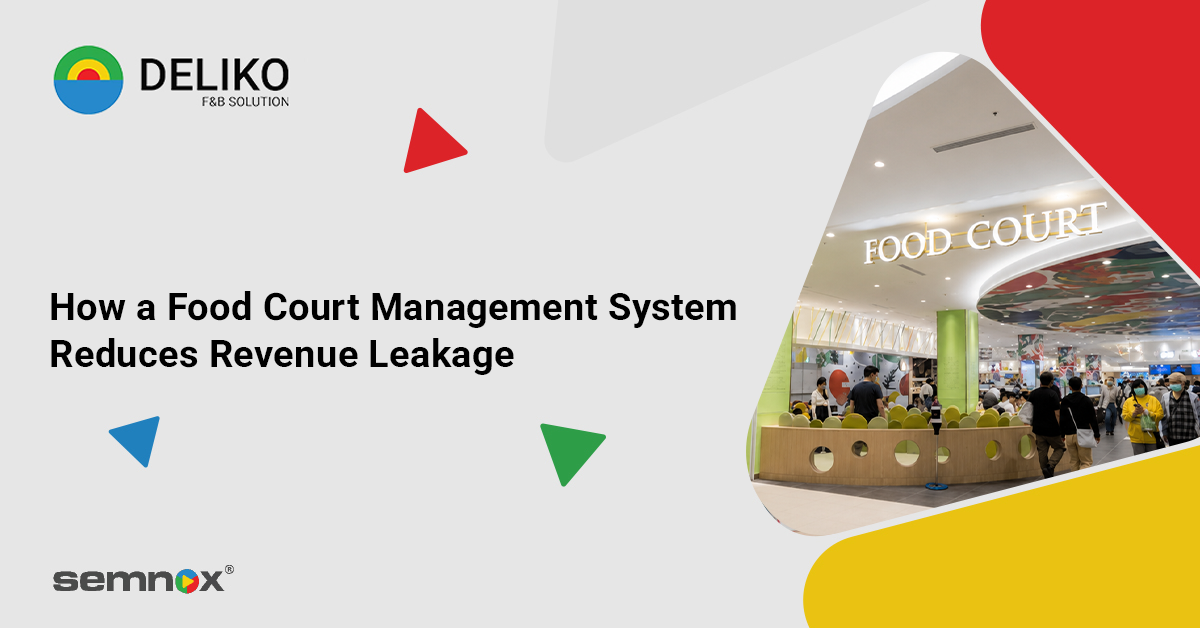
How a Food Court Management System Reduces Revenue Leakage
Introduction
A busy food court can process hundreds or even thousands of transactions every day. While high footfall creates revenue opportunities, it also increases the risk of revenue leakage. Billing mistakes, inventory mismatches, cash handling errors, and unauthorized discounts often go unnoticed, quietly affecting profitability.
For operators managing multiple vendors and payment channels, manual monitoring is no longer enough. A modern Food Court Management System helps eliminate these blind spots by automating operations, improving visibility, and ensuring every transaction is accurately recorded. By reducing revenue leakage, food courts can improve margins, enhance accountability, and achieve sustainable growth.
What Is Revenue Leakage in a Food Court?
Revenue leakage refers to income that should have been earned but is lost due to operational inefficiencies, process gaps, or human errors.
In food courts, revenue leakage can occur through:
- Unrecorded transactions
- Billing inaccuracies
- Cash theft or mismanagement
- Inventory shrinkage
- Unauthorized discounts
- Incorrect vendor settlements
- Reporting discrepancies
Although individual losses may seem small, they can accumulate into a significant financial drain over time.
Why Is Revenue Leakage a Major Concern for Food Court Operators?
Food courts operate in a fast-paced environment where multiple vendors, payment methods, and inventory flows must be managed simultaneously. Without proper controls, identifying where revenue is being lost becomes challenging.
Revenue leakage can lead to:
- Reduced profitability
- Inaccurate financial reporting
- Vendor disputes
- Inventory shortages
- Operational inefficiencies
Industry estimates suggest that businesses can lose between 1% and 5% of annual revenue due to process inefficiencies and unnoticed leakages. For large food courts, that can represent a substantial amount of lost income.
What Are the Most Common Causes of Revenue Leakage in Food Courts?
Manual Billing Errors
Manual entries increase the likelihood of missed transactions, duplicate charges, and incorrect billing.
Cash Handling Risks
Cash transactions create opportunities for theft, reconciliation errors, and revenue misreporting.
Inventory Discrepancies
When inventory usage does not align with recorded sales, operators may be dealing with wastage, spoilage, or theft.
Unauthorized Discounts and Refunds
Without approval workflows, employees may apply discounts or refunds that negatively impact revenue.
Limited Operational Visibility
Delayed reporting prevents management from identifying unusual trends and addressing issues quickly.
Signs Your Food Court May Be Experiencing Revenue Leakage
Revenue leakage is often difficult to detect until losses become significant. Common warning signs include:
- Frequent inventory shortages
- High refund or discount volumes
- Inconsistent daily sales reports
- Vendor settlement disputes
- Differences between recorded sales and collected payments
Regular monitoring of these indicators can help operators identify problems before they escalate.
How Can a Food Court Management System Reduce Revenue Leakage?
A Food Court Management System provides the visibility and control needed to minimize losses across food court operations.
Automated Transaction Recording
Every transaction is captured digitally, reducing the risk of missed or unreported sales.
Centralized Monitoring
Management can track sales, discounts, refunds, and settlements across all vendors from a single dashboard.
Inventory Control
Integrated inventory tracking helps identify discrepancies between stock movement and sales activity.
Vendor Accountability
The system maintains transparent records of vendor transactions and settlements, reducing disputes and reconciliation issues.
Comprehensive Audit Trails
Detailed logs make it easier to investigate anomalies and strengthen operational accountability.
How Do Cashless Payment Systems Help Reduce Revenue Leakage?
A Cashless Food Court System removes many of the risks associated with cash handling.
Improved Accuracy
Digital payments ensure transactions are recorded automatically and accurately.
Reduced Fraud
Electronic transaction records limit opportunities for theft and unauthorized adjustments.
Faster Reconciliation
Operators can reconcile sales data in real time without relying on manual cash counts.
Better Customer Experience
Faster transactions reduce waiting times and improve service efficiency.
As food courts increasingly adopt digital payment methods, cashless operations are becoming a critical tool for revenue protection.
What Features Should a Food Court Management System Include?
To effectively reduce revenue leakage, operators should look for:
Food Court POS System Integration
A reliable Food Court POS System ensures accurate billing and real-time transaction visibility.
Real-Time Reporting
Instant access to sales and operational data enables faster decision-making.
Inventory Management
Automated stock tracking helps prevent wastage and shrinkage.
Cashless Payment Support
Support for cards, mobile wallets, QR payments, and prepaid systems improves security and convenience.
Vendor Management
Vendor-specific reporting and settlement tools improve transparency.
Analytics and Audit Controls
Detailed reporting helps identify trends, anomalies, and potential risks before they affect profitability.
Modern Food Court Management Software combines these capabilities into a single platform, helping operators maintain tighter financial control.
How Deliko Helps Food Courts Protect Revenue
Deliko’s food court management solution is designed to help operators reduce revenue leakage through automation, visibility, and centralized control.
With integrated POS capabilities, real-time reporting, inventory management, cashless payment support, and multi-vendor oversight, Deliko enables food courts to track every transaction with confidence. By bringing all operational data into a single platform, operators can identify inefficiencies faster, improve accountability, and maximize revenue opportunities.
Conclusion
Revenue leakage is often hidden, but its impact on profitability can be significant. Whether it stems from billing errors, inventory discrepancies, cash handling issues, or reporting gaps, every lost transaction affects the bottom line.
A modern Food Court Management System provides the tools needed to identify, prevent, and control revenue leakage. Combined with a Food Court POS System, advanced analytics, and a Cashless Food Court System, operators gain complete visibility into their operations and greater confidence in their financial performance.
As food courts continue to grow and evolve, investing in intelligent Food Court Management Software is a practical step toward stronger controls, better accountability, and long-term profitability.
FAQs
1. What is revenue leakage in a food court?
Revenue leakage refers to income lost due to operational inefficiencies such as billing errors, inventory discrepancies, cash handling issues, or unauthorized transactions.
2. How does a Food Court Management System help reduce revenue leakage?
It automates transaction tracking, centralizes reporting, improves inventory visibility, and creates audit trails that strengthen accountability.
3. Why is a Food Court POS System important?
A Food Court POS System ensures accurate billing, faster transactions, and real-time visibility into sales performance.
4. What are the benefits of a Cashless Food Court System?
It reduces cash-related risks, improves transaction accuracy, simplifies reconciliation, and enhances customer experience.
5. What features should Food Court Management Software include?
Key features include POS integration, inventory management, cashless payments, real-time analytics, vendor management, and audit controls.

As a highly experienced thought leader in the hospitality industry, Suresh Kumar carries a unique combination of global experience and multi-industry specialty. With 15 years of experience as the marketing head and director of Lucid IT Solutions and seven years of directing sales at Pazo, Suresh has especially honed skills with F&B and restaurant POS — skills that make him an irreplaceable asset at Semnox. Now, he spearheads the realm of cafeteria management solutions through seamless business operations and collaborative development.