
How Self-Ordering Kiosks Transform F&B Operations in Entertainment Venues
What are self-ordering kiosks in entertainment venues?
Food and beverage is an important part of the experience at cinemas, amusement parks, stadiums, bowling centers, family entertainment centers, and other attractions. But when several hundred guests want food at the same time, traditional counters can quickly become crowded.
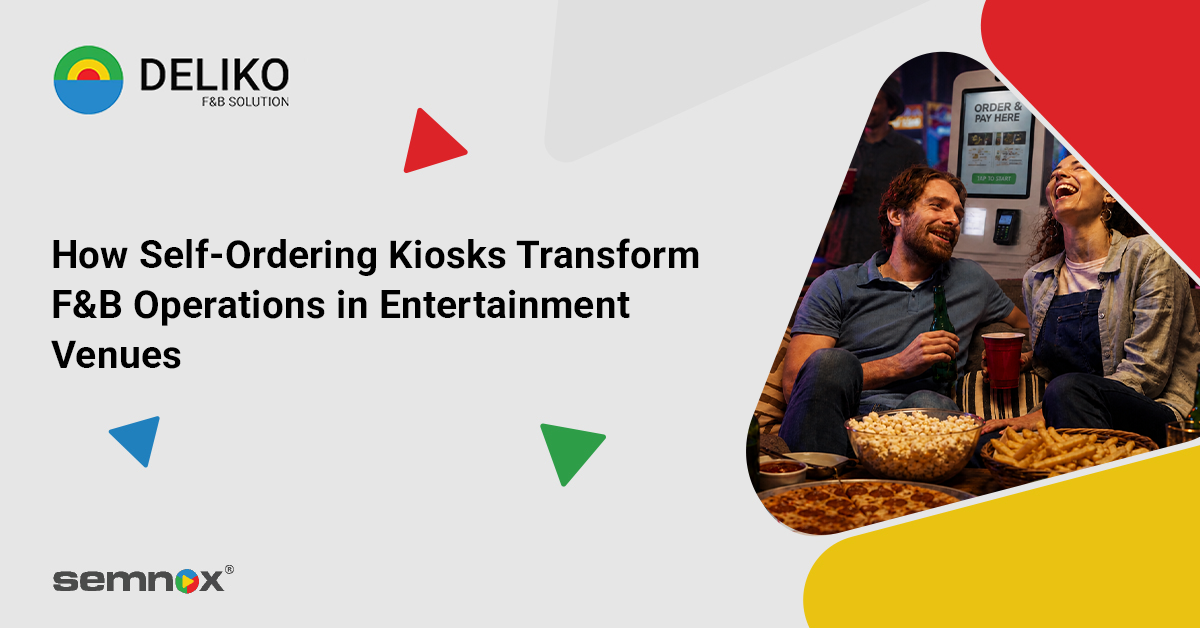
Self-ordering kiosks for entertainment venues offer a practical way to handle this problem. Instead of waiting for a staff member to take their order, guests can browse the menu, customize items, add extras, and complete payment directly through a touchscreen kiosk.
The kiosk sends the order to the relevant kitchen or preparation area, reducing the number of steps between choosing a meal and receiving it.
For operators, this is more than a different ordering method. A well-integrated kiosk can become part of the venue’s wider F&B and POS ecosystem.
Why are entertainment venues adopting self-ordering kiosks?
Entertainment venues often experience uneven demand. A cinema may have a quiet concession area for much of the afternoon and then see a sudden rush before a popular screening. A stadium can experience a similar spike before an event and during breaks.
Traditional counters depend heavily on staff to manage these surges. Kiosks give guests another way to order, allowing venues to serve more people without relying entirely on additional staffed counters.
They also give customers greater control. Guests can take their time browsing the menu, see available options, and place an order without having to wait for an employee.
This combination of convenience and operational flexibility is driving interest in self-service ordering kiosks across entertainment venues.
How do self-ordering kiosks improve F&B operations?
Kiosks simplify several parts of the ordering process.
First, they reduce the pressure on staffed ordering counters. Employees can spend more time preparing orders, assisting guests, and handling tasks that require human interaction.
Second, digital menus can be updated centrally. Operators can change prices, highlight promotions, remove unavailable items, or introduce new combinations without replacing printed menus.
Third, orders are entered directly by customers, which can reduce errors caused by misheard or incorrectly entered orders.
An entertainment venue kiosk system can also connect ordering data with POS, inventory, and reporting tools, giving managers a clearer view of F&B performance.
Can self-ordering kiosks increase food and beverage revenue?
They can create more opportunities to increase the value of each transaction.
A digital menu has space to display meal combinations, upgrades, add-ons, and complementary products at the point when a customer is making a purchase. For example, someone ordering a burger can be prompted to add a beverage or upgrade to a meal.
Kiosks also make it easier to present the full menu consistently. Every customer sees the same available options and promotions, reducing the chance that an offer is overlooked.
The impact will vary by venue, menu, pricing, and implementation, but the ability to make relevant recommendations at checkout can support higher average order values.
How do self-ordering kiosks improve the guest experience?
Nobody visits an entertainment venue hoping to spend their time standing in a food queue.
Kiosks give guests another option. They can browse the menu at their own pace, customize an order, review the total, and pay without waiting for a cashier.
For families or groups, this can be particularly useful because customers can review options together before submitting an order.
A simple interface also helps make the ordering process more predictable. Guests know what they have selected, what it costs, and what happens next.
The result is a more convenient entertainment venue food service experience, particularly during busy periods.
How do kiosks help entertainment venues during peak hours?
Peak periods are where kiosks can make the biggest operational difference.
Instead of directing every customer to the same staffed counter, venues can distribute demand across several ordering points. This can reduce congestion and give staff more time to focus on fulfillment.
For example, a cinema could use kiosks near concession areas to handle the rush before multiple screenings. A stadium could deploy kiosks around high-traffic sections so guests have more convenient ordering points.
When combined with digital order displays and efficient kitchen workflows, kiosks can help venues manage sudden increases in demand without creating the same level of queue pressure.
How do self-ordering kiosks reduce labor pressure?
Kiosks do not necessarily replace employees. Their bigger value is helping employees spend their time where it matters most.
Instead of having several staff members focused primarily on taking orders and processing payments, some of those tasks move to the kiosk. Employees can then concentrate on food preparation, order fulfillment, customer assistance, and maintaining the service area.
This can be particularly helpful during peak periods when staffing additional cashiers for short demand spikes may not be practical.
How do kiosks integrate with entertainment venue POS systems?
Integration is important. A kiosk should not operate as an isolated ordering device.
When connected to an entertainment venue POS system, the kiosk can send orders directly into the venue’s sales and fulfillment workflow. Product prices, menus, promotions, and transaction information can be managed more consistently.
This also gives managers better reporting. Kiosk sales can be compared with counter sales, helping operators understand which ordering channels are performing best.
With the right F&B kiosk software, operators can connect the customer-facing kiosk experience with the systems already supporting their F&B operation.
What payment methods should entertainment venue kiosks support?
Payment flexibility is essential for a modern kiosk. Depending on the venue and market, kiosks can support:
- Credit and debit cards
- Contactless card payments
- QR-based payments
- Mobile wallets
- Digital payment platforms
- Prepaid accounts or venue wallets
A cashless kiosk ordering experience can speed up checkout and reduce the need for staff to handle cash. It can also create a digital record of every transaction, making reconciliation easier.
How do self-ordering kiosks improve inventory and kitchen operations?
Kiosks can contribute to better kitchen and inventory management because orders are captured digitally.
When a customer places an order, the information can flow directly to the appropriate preparation area. This reduces the need for staff to manually transfer orders from a counter to the kitchen.
Connected systems can also provide useful information about product demand. If a particular item sells heavily during certain screenings or events, managers can use those patterns to plan stock and preparation more effectively.
This can help reduce both stockouts and unnecessary food wastage.
What features should the best self-ordering kiosk software include?
The best solution should combine ease of use with strong operational integration. Important features include:
- Simple touchscreen navigation
- Customizable digital menus
- Product and modifier selection
- Combo and upselling options
- Multiple cashless payment methods
- POS integration
- Kitchen order integration
- Inventory connectivity
- Real-time reporting
- Multi-kiosk and multi-outlet management
- Centralized menu and pricing controls
The software should also be scalable. A venue starting with two kiosks may eventually need them across several outlets or locations.
Conclusion: What is the future of kiosk-based F&B operations in entertainment venues?
Self-ordering kiosks are changing the way entertainment venues approach F&B service. They give guests more control over ordering while helping operators manage queues, reduce pressure on staff, and collect better sales data.
The real value comes when kiosks are connected to the rest of the operation. An integrated entertainment venue kiosk system, POS, payment platform, inventory tools, and kitchen workflow can turn self-service ordering into a connected F&B operation.
As entertainment venues continue looking for faster service and more efficient ways to increase revenue, self-ordering kiosks for entertainment venues are likely to become an increasingly important part of the guest experience.
FAQs
1. What are self-ordering kiosks for entertainment venues?
They are touchscreen ordering terminals that allow guests to browse menus, customize meals, place orders, and make payments without depending on a cashier.
2. Do self-ordering kiosks increase restaurant revenue?
They can support higher revenue by reducing ordering friction, improving throughput, and presenting customers with relevant combos, upgrades, and add-ons.
3. How do kiosks reduce wait times?
Kiosks allow multiple customers to place orders simultaneously, reducing dependence on a single staffed ordering counter and helping venues handle peak demand more efficiently.
4. Can kiosks integrate with POS and kitchen systems?
Yes. With suitable F&B kiosk software, kiosks can connect with the POS and kitchen workflow so that orders, payments, and sales information move through the same operational system.
5. What payment methods do entertainment venue kiosks support?
Depending on the solution, kiosks can support cards, contactless payments, QR payments, mobile wallets, and prepaid accounts.
6. What is cashless kiosk ordering?
Cashless kiosk ordering allows customers to place and pay for their orders digitally without using physical cash. This can make transactions faster and easier to track.
7. Why is POS integration important for entertainment venue kiosks?
POS integration keeps kiosk sales connected with the venue’s wider F&B operation. It improves transaction tracking, reporting, menu management, and operational visibility.