

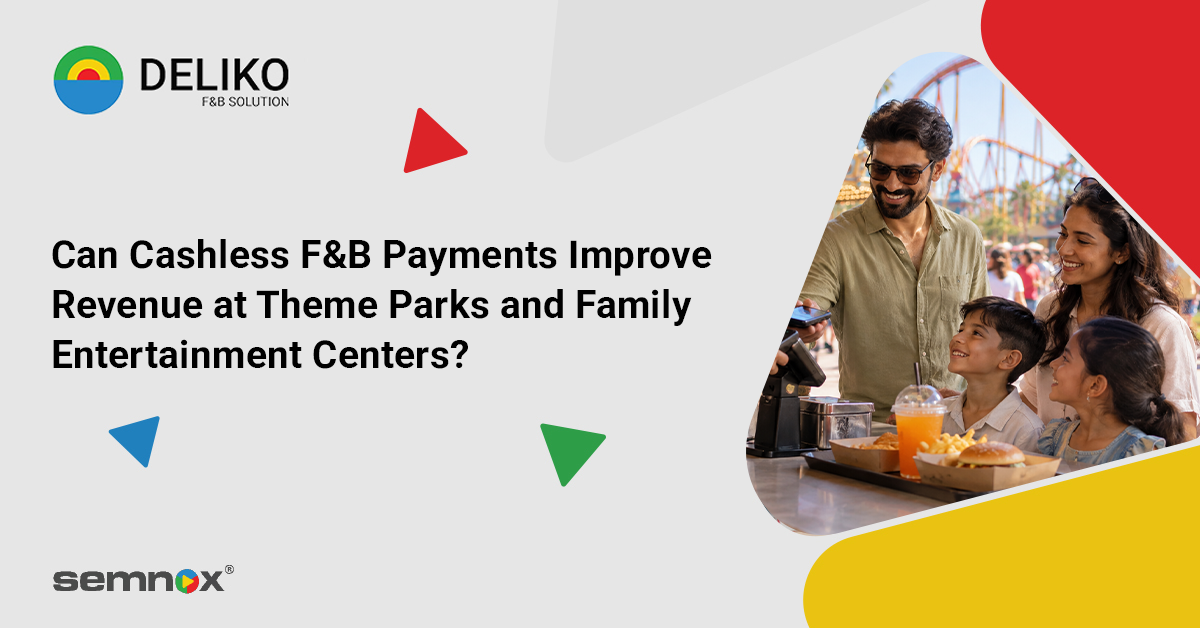
Can Cashless F&B Payments Improve Revenue at Theme Parks and Family Entertainment Centers?
Food and beverage is an important part of the visitor experience at theme parks and family entertainment centers (FECs). From quick snacks between rides to meals during a family outing, F&B outlets create multiple opportunities to generate additional revenue.
However, long queues, slow transactions, cash handling, and limited visibility into sales can affect both revenue and customer satisfaction. This is where cashless F&B payments for theme parks can make a difference.
By allowing visitors to pay quickly through cashless methods, entertainment venues can simplify transactions, reduce friction, and gain better visibility into F&B operations. But can this actually improve revenue?
The answer depends on how the payment system is implemented and integrated with the venue’s wider operations.
What Are Cashless F&B Payments at Theme Parks and FECs?
Cashless F&B payments allow visitors to purchase food and beverages without relying on physical cash. Depending on the system, customers may use prepaid cards, digital wallets, contactless cards, QR-based payments, or other supported payment methods.
A cashless payment system for entertainment venues can connect transactions across food courts, restaurants, kiosks, cafés, and other F&B locations.
For large venues, this creates a more connected payment environment. Instead of every outlet operating independently, transactions can be recorded through an integrated system, making it easier for operators to monitor sales and manage their F&B business.
Can Cashless Payments Increase F&B Revenue at Theme Parks?
Cashless F&B payments for theme parks can support revenue growth by making the purchasing process faster and more convenient.
When visitors spend less time waiting to pay, they can return to enjoying rides, attractions, and activities sooner. At busy F&B outlets, faster transactions can also allow more customers to be served during peak periods.
Cashless systems can contribute to theme park F&B revenue through several operational improvements:
- Faster checkout and shorter queues
- Reduced dependence on cash handling
- Convenient payment options
- Better transaction visibility
- Easier management of multiple outlets
- Access to transaction and sales data
Cashless payments do not automatically increase spending, but reducing friction at the point of purchase can create better conditions for more efficient F&B operations.
How Do Cashless F&B Payments Improve the Visitor Experience?
For families visiting a theme park or FEC, convenience matters. Visitors may already be managing tickets, children, personal belongings, and activity schedules. A complicated payment process can add unnecessary friction.
With cashless payments at theme parks, visitors can use supported contactless or digital payment methods to complete purchases more efficiently.
Shorter queues can be particularly valuable during lunch hours, weekends, holidays, and other peak periods. A smoother checkout experience can also reduce congestion around popular food outlets.
For FECs, where customers frequently move between attractions, games, dining areas, and other activities, convenient family entertainment center payments can make the overall experience more seamless.
How Can Cashless F&B Payments Reduce Revenue Leakage?
Revenue leakage can occur when transactions are not properly recorded, cash handling creates discrepancies, or operators lack sufficient visibility into individual outlets.
A cashless system creates a digital record of transactions, making it easier to reconcile sales and identify unusual patterns.
Operators can use transaction records to compare sales across outlets, shifts, products, and time periods. This can help highlight discrepancies that may require further investigation.
Cashless payments can therefore support stronger financial controls while reducing some of the operational challenges associated with handling physical cash.
What Role Does POS Software Play in Cashless F&B Payments?
Payment technology becomes more useful when it is connected to a capable POS system.
An integrated POS can record orders, process payments, update sales information, and provide operational reports. When combined with cashless F&B payments, it can create a more connected F&B management environment.
For example, operators can monitor:
- Sales by outlet
- Product performance
- Transaction volumes
- Peak sales periods
- Payment activity
- Staff or terminal performance
This information can help managers make informed decisions about menus, staffing, inventory, and outlet performance.
Can Cashless Payments Help Theme Parks Manage Multiple F&B Outlets?
Large theme parks may have restaurants, snack counters, cafés, food courts, kiosks, and seasonal F&B locations operating simultaneously.
Managing these outlets independently can make it difficult to maintain consistent visibility. A centralized cashless system can help bring transaction information together.
Managers can review sales activity across locations and identify which outlets are experiencing higher demand. This can support better resource allocation and help teams respond to changing visitor patterns.
For venues with multiple locations, centralized cashless F&B payments for theme parks can therefore become part of a broader operational strategy rather than simply a payment upgrade.
How Do Cashless Payments Help Family Entertainment Centers Increase Revenue?
FECs often combine multiple revenue-generating activities under one roof. Visitors may spend on food, beverages, games, attractions, and other experiences during a single visit.
Efficient family entertainment center payments can make it easier for customers to make purchases throughout their visit.
For example, a family may purchase snacks between activities rather than spending time waiting at a busy counter. When payment is convenient and integrated into the venue’s operations, F&B can work more effectively alongside other entertainment offerings.
Cashless systems can also provide operators with a clearer picture of purchasing patterns, helping them understand when and where visitors are spending.
What Data Can Cashless F&B Payments Provide to Entertainment Venues?
One of the biggest operational advantages of cashless F&B payments is the data generated through transactions.
Depending on the system and integrations available, operators may be able to analyse:
|
Data |
How It Can Help |
|
Sales by outlet |
Identify high- and low-performing locations |
|
Sales by product |
Understand popular menu items |
|
Transaction volume |
Plan staffing and counter capacity |
|
Peak periods |
Prepare for demand fluctuations |
|
Payment activity |
Improve reconciliation and monitoring |
|
Customer spending patterns |
Understand purchasing behaviour |
This information can help operators move beyond simply processing transactions and use F&B data to improve decision-making.
Conclusion — Can Cashless F&B Payments Improve Revenue?
Cashless F&B payments for theme parks can support revenue improvement by making transactions faster, reducing payment friction, improving operational visibility, and generating useful sales data.
The benefits extend beyond payment convenience. When integrated with POS and F&B management systems, cashless payments can help theme parks and FECs manage outlets more efficiently, monitor performance, and deliver a smoother visitor experience.
For entertainment venues looking to modernize their F&B operations, cashless payments can therefore be an important component of a broader strategy focused on efficiency, convenience, and revenue management.
FAQs
How do cashless payments reduce queues at theme parks?
Cashless transactions can reduce the time required to complete purchases compared with slower payment processes. Faster checkout can help F&B counters serve more visitors during busy periods.
What is a cashless F&B payment system?
A cashless F&B payment system enables customers to pay for food and beverages using digital, contactless, prepaid, or other supported payment methods instead of physical cash.
How do cashless payments work in family entertainment centers?
Customers use supported payment methods at F&B counters, kiosks, or other outlets. Transactions are digitally recorded, and an integrated system can provide operators with centralized sales and payment information.
Can cashless payments increase average order value?
Cashless payments can make purchasing more convenient, but they do not by themselves guarantee a higher average order value. Operators can combine convenient payments with menu strategies, promotions, and other revenue initiatives.
What payment methods can be used at theme park F&B outlets?
Depending on the system, venues may support contactless cards, digital wallets, QR-based payments, prepaid cards, and other cashless payment methods.
Are cashless payments useful for multiple F&B outlets?
Yes. When connected to centralized POS or management software, cashless payment systems can help operators monitor transactions and sales activity across multiple outlets.
What is the difference between cashless F&B payments and traditional cash payments?
Cashless payments create digital transaction records and can reduce the need for physical cash handling. Traditional cash payments require manual cash collection, reconciliation, and additional handling processes.